
When we think of modern security cameras, feature-rich IP cameras jump to mind.
But IP cameras actually emerged relatively recently out of the hundred-year history of security cameras, and it wasn’t until the late 1970s that CCTV became more common in business places.
The history of surveillance cameras takes us across the world, from Soviet Russia to Queens, New York.
Read on to discover how security cameras went from a military classified technology to a mainstay of our homes and workplaces.
Table of Contents
When did security cameras get invented?
One of the earliest security camera systems was invented by León Theremin back in 1926. But the security cameras we have today have come a long way since then. Here’s the story of how security cameras became what they are today.
1920s
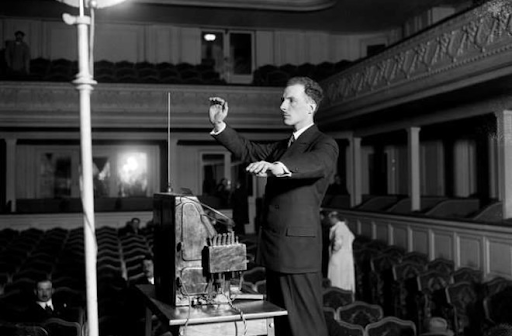
Initial attempts at CCTV were invented as early as 1926, when Soviet inventor, León Theremin (best remembered for inventing the theremin), worked on ‘distance vision’, a mechanical kind of CCTV.
It was shown to Joseph Stalin before being classified by the army, but it was never put to use. Theremin went on to gain greater fame for his pioneering efforts in electronic music.
1940s
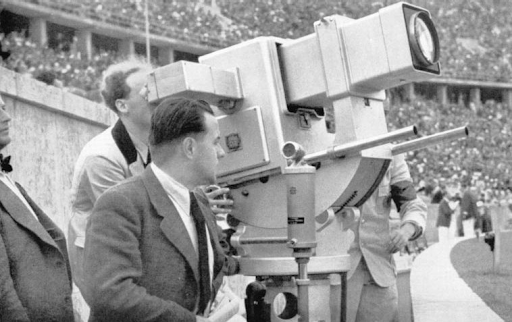
In 1942, German engineer, Walter Bruch, invented a CCTV system that was used by the Nazis to observe V-2 rocket launches.
By 1948, the commercial viability of CCTV was beginning to be explored by contractors elsewhere, namely in America, but it would be several decades before the idea was adopted by homeowners and business owners.
1960s
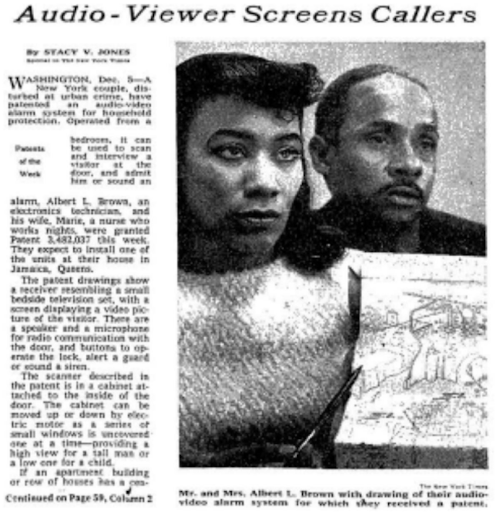
In 1966, Marie Van Brittan Brown, a nurse from Queens, New York, filed a patent for a home security system she invented. This is widely regarded as the first home security system.
Working as a nurse, she created the system purely for her and her husband’s own use at home in Queens, where crime rates were particularly high.
What motivated its creation was to increase a sense of safety when left alone at home, since the couple both worked irregular hours.
1990s
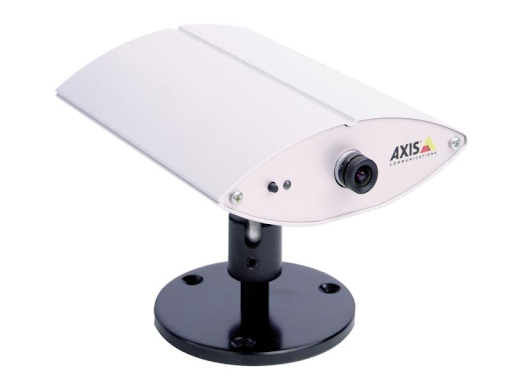
Brown’s system was deeply influential, and, although the infrastructure wasn’t up-to-par for decades, it remained a largely untouched template for home security until 1996, when the first IP (internet protocol) camera was invented by Axis Communications.
The Axis Neteye 200 was a fairly primitive IP camera model that wasn’t capable of real-time streaming. Nonetheless, it paved the way for future innovations that worked via the internet, which came sooner rather than later.
2000s
Since then, IP security cameras have massively increased in popularity.
Compared with conventional CCTV, they boast internet-enabled features that greatly increase the efficiency and overall usefulness of surveillance, like push notifications, motion detection, and live feed streaming.
Perhaps the most obvious difference between the early models and what’s available now is the availability of cloud storage. This makes keeping and accessing footage much more efficient than physical storage.
2010s
The rise of the smartphone came hand-in-hand with great IoT innovations.
One of these was AlfredCamera, which launched in 2014 with the intention to broaden access to security cameras via an app, which can transform phones, tablets, and computers into full-fledged security cameras.
With over 70 million downloads, it’s clear that access to security cameras, and the use of them in homes, has increased markedly over the last decade.

No longer is security something reserved for governments, militaries, and the wealthiest members of society. In many ways, this increase in accessibility builds upon the enduring legacy of home security pioneers like Marie Van Brittan Brown.
The Popularity of Security Cameras
According to one report, almost 450 million CCTV cameras have been installed worldwide. Clearly, demand for security cameras is as large as ever, just as crime continues to affect the quality of peoples’ lives across the globe at all levels of the social stratum.
The popularity of security cameras is also likely a result of the push to encourage technology use in the home by some of the world’s biggest firms, like Google and Amazon.
This is part of a broader vision to automate everything that goes on in homes, from security to entertainment.
The Future’s Bright
The North American smart home security camera market was valued at $3.48 billion in 2023. It might sound like a big number, but we remain in the early stages.
Its compound annual growth rate until 2030 is an impressive 19.8%, meaning the smart home security camera market is projected to be worth about $12.74 billion by the end of the decade.
That’s nearly four times the size it was at the beginning.
Undoubtedly, it’s a highly lucrative market, and the projections point to smart home security cameras as the most important aspect of the security industry moving forward.
Perhaps the use of conventional CCTV in the home will be virtually unheard of in the near future. Watch this space.