
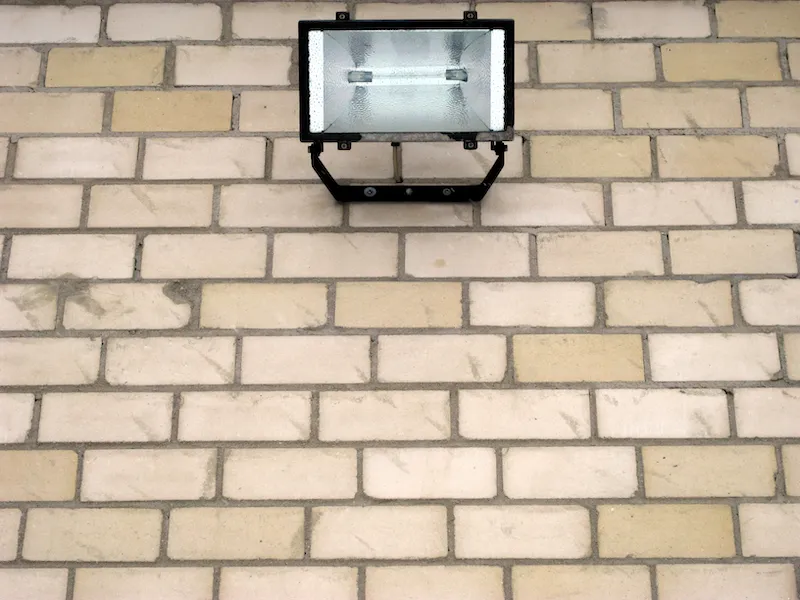
In most places, there is a belief that lights are a deterrent for burglars. While it is evident that most burglars are simply opportunists, there isn’t much hard evidence to support the idea that light is a significant deterrent.
However, motion detector lights play an important role in improving the visibility of the home, especially for security cameras.
Read on to learn all about motion detector lights, including the best motion detector lights and how they work.
Table of Contents
What Are Motion Sensors?
There are two types of motion sensor: active and passive.
| Active Motion Sensor | Active motion sensors are typically used in stores. They detect a change in the environment by producing a light, sound, or microwave. For instance, once a customer obstructs a light beam at the entrance of a store, the sensor detects their presence. |
| Passive Motion Sensor | Passive motion sensors detect infrared energy, hence the alternative name ‘PIR’ (passive infrared). Motion detector lights and security systems typically use passive motion sensing because it can detect changes in the environment based on the temperatures that humans radiate. |
How Do Motion Detector Lights Work?
Motion detector lights work by using a passive motion sensor, which monitors changes in the amount of infrared in the environment. Rapidly shifting readings indicate movement. This information is then sent to the light, which turns on once movement passes a certain threshold.
Are Motion Detector Lights Worth It?
Yes, motion detector lights are worth it, but the benefit of outdoor security lighting is how it works in conjunction with cameras.
Motion detector lights indoor and outdoors help increase visibility in and around the home so that security cameras won’t miss a beat. Not to mention, a motion sensor security light serves as a reliable visual warning sign of a home invasion.
As far as burglar deterrence goes, the presence of dogs on the property, overt placement of security cameras in inaccessible places, and alarms are all more useful.
How to Choose Motion Sensor Lights
When choosing motion sensor lights, there’s four main preferences to consider.
1. Weatherproofing
Are the lights going to be used outside? If so, choose an option that has an IP rating. This is a solid indication of how waterproof a product is. For outside, opt for an option with a rating of at least IP65, which means the product has undergone testing against low pressure water jets and is completely protected from dust ingress.
2. Motion light bulbs
There’s three main types of motion light bulb available on the market, each with its own pros and cons.
| LED | By far the most common type of bulb used in motion detector lights, LEDs produce light using diodes that electricity passes through. They are brighter and last much longer than other types of light bulbs. They are, however, more expensive to buy. |
| Incandescent | The oldest of the bunch, incandescent bulbs create light by heating a wire filament until it glows. They are less efficient than both LED and fluorescent lights since lots of the energy is lost as heat. They are largely being phased out, so good luck finding a new motion detector light with one! |
| Fluorescent | A chemical reaction inside a fluorescent lamp or tube causes mercury vapors to make a phosphor coating glow from ultraviolet light. They are much more efficient (and more expensive) than incandescent lights, but the running cost is minimal. The mercury inside them is bad for the environment if not disposed of properly. |
3. Light color and pattern
The hue of the light can be manipulated most easily with LEDs. Many LED light bulbs can be controlled out of the box to create different colors of light using a remote controller or an app. Incandescent lights produce a warm hue, while fluorescent lamps create a very pale white.
The ‘pattern’ of a light refers to how it disperses. For instance, spotlights focus the light intensely into one spot, while floodlights spread it out to illuminate a large space.
4. Power source
Motion detector lights get their power from either disposable batteries, a wired connection, or solar panels. The latter is only useful if the lights are being placed outside. Batteries are also generally more handy for outdoor use, while a wired connection is the most reliable source of power.
Best Motion Detector Lights by Product Type
Though all motion detector lights on the market will likely function via PIR technology, brands will market their lighting technology differently depending on specific features.
Discover some of our picks for the best products below.
Best LED Motion Sensor Lights
Light-emitting diodes, or LEDs, are used in most modern motion sensor lights. Low power consumption and a longer lifespan make them a great source of light indoors and out. Check out some below.
| LEONLITE LED Security Light | Youtob Motion Sensor LED Ceiling Light | UME 19w LED Flood Light |
|---|---|---|
| Best for outdoors | Best for indoors | Best for outdoors |
| ✔️ Hardwired ✔️ IP65 waterproof ✔️ 180° sensing angle ✔️ 70ft long sensing range | ✔️ Hardwired ✔️ Ceiling fixture ✔️ Day and Night modes ✔️ 90°-120° sensing angle | ✔️ Hardwired ✔️ IP65 waterproof ✔️ 3 light time modes ✔️ 50ft sensing range |
| From $55.99 | From $23.99 | From $34.99 |
Best Solar Motion Sensor Lights
Outdoor security lighting is more efficient when powered by the sun. Some outdoor lights feature small solar charging panels to maximize energy efficiency and avoid constant battery replacement.
If placement is going to be outside, consider some of the solar-powered options below.
| HMCITY Solar Lights | AloftSun Motion Sensor Solar Landscape Spotlights | MSG Solar Street Lights |
|---|---|---|
| Best for external walls | Best for garden | Best for yard/driveway |
| ✔️ 120 LED bulbs ✔️ IP65 waterproof ✔️ 270° wide lighting angle, illuminates up 30m ✔️ 23 lighting modes | ✔️ LED bulbs ✔️ IP68 waterproof ✔️ Fork shaped to be fit into the ground ✔️ 3 lighting modes | ✔️ LED bulbs ✔️ Works in -30℃-50℃ temperatures ✔️ Street lamp shape for easy mounting or pole fixing |
| From $21.99 | From $26.99 | From $179 |
Best Wireless Motion Sensor Lights
‘Wireless’ doesn’t necessarily mean ‘wire-free’, so expect the need to recharge many of the indoor options marketed as ‘wireless’ with USB cables if they don’t feature batteries or solar panels. Wireless choices are much more convenient for installation.
Here’s some of our picks.
| SOLLA Outdoor Motion Sensor Light | PRIORARE Motion Sensor Closet Light | Youtob Battery powered LED Ceiling Light |
|---|---|---|
| Best for customization | Best for indoors | Best for wet indoor and semi-open spaces |
| ✔️ LED bulbs ✔️ IP65 waterproof ✔️ Long battery life (3x D-cell batteries) ✔️ Customizable brightness, lighting time, and sensitivity | ✔️ LED bulbs ✔️ Rechargeable battery using USB cable ✔️ Discreet and chic ✔️ Magnetic strip for easy mounting on metal surfaces | ✔️ LED bulbs ✔️ IP54 waterproof ✔️ Cordless battery powered (3x D-cell batteries) ✔️ Ceiling fixture that can be mounted in wet spaces, like walk-in showers and bathrooms |
| From $39.99 | From $39.99 | From $19.99 |
Where To Use Motion Detector Lights
Motion lights work better in some places than others. Particularly when installing a security sensor light, there’s certain places that should be avoided altogether. Find out where to put motion lights indoors and outdoors below.
Where are the best places for putting motion detector lights indoors?
Buildings not connected to the main part of the home, like garages, sheds, greenhouses, and basements, can benefit from having motion-activated light sources.
Keeping lights on constantly in spaces that aren’t occupied frequently is a waste of money and energy. When the lights do come on, it’s a valuable alert to something appearing on the property.
Where are the best places for putting motion detector lights outdoors?
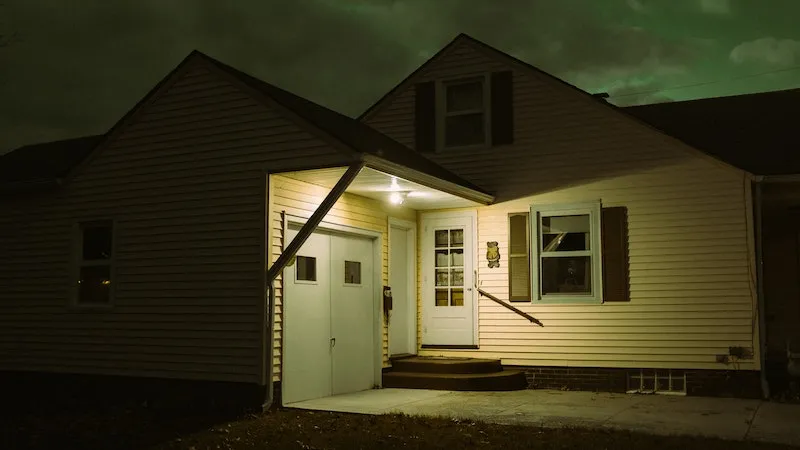
Porch lights, entryway lights, and around the garden are popular and useful places for motion detector lights outdoors. At night-time, occupants will immediately know when someone approaches the home.
A floodlight can be useful for a particularly large driveway or gated section because it will greatly maximize visibility for large areas.
Where to avoid putting motion detector lights indoors?
Any of the main living areas of the home should be avoided. Smart lighting for inside the home is only useful when based around voice control, so that occupants can have lights come on and off without a physical switch.
Another more common solution for inside the home is a night light, which uses a sensor to come on when it is dark. These are much weaker lights, so won’t be a source of irritation in the way a motion detector light would be.
Recommended reading: The Ultimate Guide to Night Vision Cameras
Where to avoid putting motion detector lights outdoors?
As with security cameras and any other type of outside motion detector, outdoor motion sensor light should always be placed as high up off the ground as possible to avoid being stolen or broken, so never place them less than seven feet off the ground.
Don’t place motion detector lights over the tops of windows or directly under window sills. This will become irritating very fast, and wastes a degree of the light.
FAQ
Do motion lights deter burglars?
Motion lights might deter burglars, but there is no hard evidence supporting this. There is a widely held belief that a well-lit home implies people are occupying the home. According to ADT, they can deter but only for a ‘small portion of potential burglaries’.
Where do you put motion sensor lights?
Outdoor locations like porches, driveways, and on the side of the home, are the most beneficial places to put motion sensor lights. They can also be useful for lighting up spaces that aren’t regularly occupied, like walk-in closets, garages, greenhouses, and basements.
Do motion sensors use a lot of electricity?
Most motion sensor lights available on the market make use of LED bulbs, which are widely considered more energy-efficient than regular bulbs. This helps to reduce the amount of electricity the sensor uses as a whole. The cost/consumption is offset by the amount of money saved by having the lights off most of the time. Putting them in a place where constant traffic is expected is therefore not advisable.
How long do motion lights stay on?
How long motion lights stay on is entirely dependent on the product itself. Many feature customizable settings so that users can adjust how long they want them to stay on for once they initially detect motion.
Does a motion light need a switch?
No, motion lights do not need a switch. They are ‘switched on’ by motion, which is generally detected through shifting infrared.
Conclusion
In terms of security benefits, prioritizing other aspects of the home’s security is more important than installing motion detector lights because it isn’t entirely clear how significant exterior lighting is in deterring burglaries.
However, it is still an important part of creating effective home security at night because it provides a strong visual cue that something has approached the property. It’s also useful for keeping security camera images detailed and in full-color and for helping to park vehicles safely in driveways at night.
Recommended reading: A Crash Course in Motion Sensor Cameras