
Motion detection is a great aid in making our security cameras more useful and efficient. That is, until it isn’t.
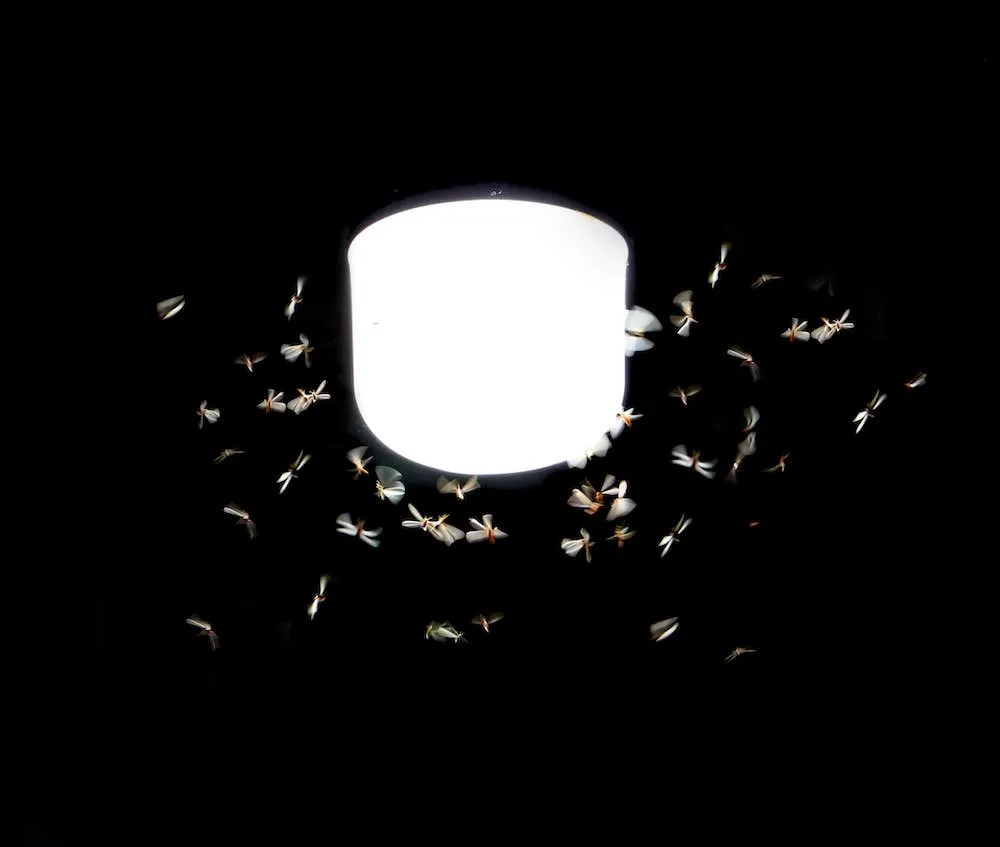
If you’ve noticed bugs swarming your security camera, there’s a very probable chance that the light emitted by your camera is attracting insects. This can make motion detection effectively useless, as the bugs falsely trigger the camera to start recording.
Thankfully, there are some things you can do to help stop false start recordings and prevent other issues caused by insects: read on to learn how to stop bugs from triggering motion cameras and more.
Table of Contents
Do Night Vision Cameras Attract Bugs?
It’s easy to spot swarms of moths and midges gathering at lamp posts and other light sources, but are insects attracted to infrared light?
Infrared is emitted by security cameras that support night vision. It lights up the scene with light we can’t see, so the camera can create a black-and-white image in the dark. In short (and probably much to your disappointment), bugs are indeed attracted to infrared light, according to research. Thankfully, this is likely significantly less than the attraction to ultraviolet and visible light.
Of course, it can still prove to be a big hindrance to the overall effectiveness of your security cameras. You’ll notice small red lights from the LED either around the lens or inside it on many camera models, which also creates more than sufficient visible light to attract insects.
Credit: Tom Fort.
How to Stop Bugs from Triggering Motion Cameras
One of the major problems afflicting night vision, bugs will naturally gravitate towards the infrared and visible light emitted by your outdoor security camera, especially if there’s no other sources of light nearby.
Here’s some effective ways to combat the problem, saving your cloud storage, SD cards, and smartphone notification center from the burden of constant nightly activations caused by motion detection.
Bug Zappers
Bug zappers are a very effective way to kill bugs and they work on the premise of light attracting them. Emitting a very strong UV light makes insects instinctively flock to them; upon making contact, they are electrocuted and die instantly.
The primary issue surrounding bug zappers is that they don’t actually attract all kinds of bugs. Unless you’re an expert on insects, there’s a high chance you won’t actually know if the type of bugs flocking to your security camera will be attracted to a bug zapper until after you’ve bought and set one up.
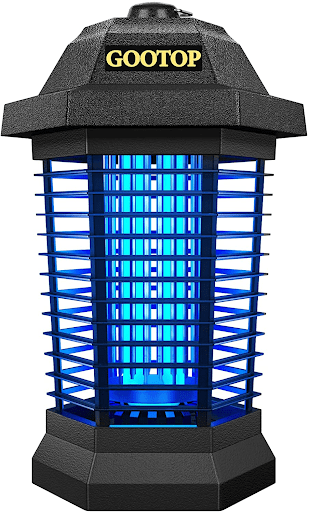
Most significantly, various studies suggest that mosquitos and other biting bugs may not actually be all that concerned with zappers. In fact, according to the Colorado State University Extension, ‘no controlled scientific study has shown that these devices reduce mosquito biting rates outdoors’. So if you suspect they’re the culprits, perhaps consider another method.
Insect Repellent
Although insect repellents are usually sold as sprays and roll-ons for the body, they can also be effective when put on objects. With caution, you can spray a light coating of insect repellent on the camera itself, but be sure to cover up the lens and any gaps that could result in the circuitry becoming wet or damaged.

Read care labels first to make sure this is suitable. Alternatively, you can use ‘natural’ repellents, like citronella and peppermint oil, around the base of the camera or smeared on mounting areas.
Outdoor Lighting
Insects are attracted to forms of UV light far more than infrared because the sun and moon are sources of it. You may have heard of the rather tragic anecdote that moths believe the incandescent lights they can frequently be found by are actually the moon.
With this in mind, installing visible outdoor lighting separate from your security camera is a wise way to divert insects’ attention, as they will instinctively gather at these far brighter sources of light. This should keep the heat (no pun intended) off your infrared emitting motion detection camera.
Adjust Detection Zones
There’s a chance you may be able to prevent false recording starts by making some simple adjustments to your camera’s settings. Many motion detection cameras now allow for ‘zones’ to be altered, usually through their corresponding app that’s been downloaded to a screen device.
How this is customizable will differ depending on the manufacturer; some cameras may allow you to select the exact pixels in the frame that you want to be included, while others will allow for smaller objects to be ignored. The latter is more useful, because bugs will try to get as close as possible to the light source, meaning they will dominate the frame.
Other Issues Bugs Create
Yes, they really are that much of a nuisance when it comes to security camera usage that bugs can cause a range of other issues. Here are the most common, and what to do about them.
Dirty Lenses
The repeated appearance of insects around your camera will eventually take its toll on the lens. As you test out different ways of dealing with the issue, we recommend weekly cleaning of the camera to avoid the image becoming significantly degraded by dead bugs, pollen, and other debris brought onto the lens by the flying bugs.

Wet a cloth or paper towel and ring out the water and use it to gently wipe the lens. Make sure the power is off if it is hardwired, or otherwise that the batteries are removed. For thicker grime and gunk, alcohol wipes will be more effective at removing tougher smudges.
Spider Webs
Unlike the winged creatures that they call dinner, there’s no evidence to suggest spiders are attracted to light of any kind. In fact, they tend to seek out darker spaces. But where prey is, so too are hunters, meaning you may notice spiders starting to make webs around your camera if other bugs are gathering there at night. How can you stop spiders making webs on CCTV cameras?
Credit: Kam Abbot.
We’d advise leaving webs for the most part because spiders are a good way to naturally reduce the population of flies. However, if the web is over the lens, this can obscure the image picked up by your camera. Insecticide may be required in this instance, but it won’t necessarily solve the problem. Try smearing a lubricant (Vaseline, for instance) on or around the camera and its mounting area to prevent webs being formed in the first place.
Wasps
Among the more dreaded insect-related issues is the appearance of wasps. You might be wondering, why are wasps/bees attracted to my security camera? If wasps appear to be your issue, adjusting the LEDs or installing separate outdoor lighting won’t make much of a difference.
Again, insecticide sprayed around (not on) the camera can help, as can hanging a flea collar for pets out of reach around the base of the camera. Follow the product label, keep it away from the lens and seals, and keep pets and children away from it. But the repeated appearance of wasps is highly indicative of a nest being nearby. This will require professional pest control services to safely remove.
Conclusion
If you’ve experienced it yourself, you’ll no doubt agree that flying bugs on your night vision camera are among the biggest grievances faced by modern security cameras, which are now increasingly reliant on motion detection to save memory and be more practical for home usage.
Thankfully, the issues they pose can be solved by taking practical measures to prevent and remove insects, and it always helps to have a keenness for camera maintenance in general.
Recommended reading: